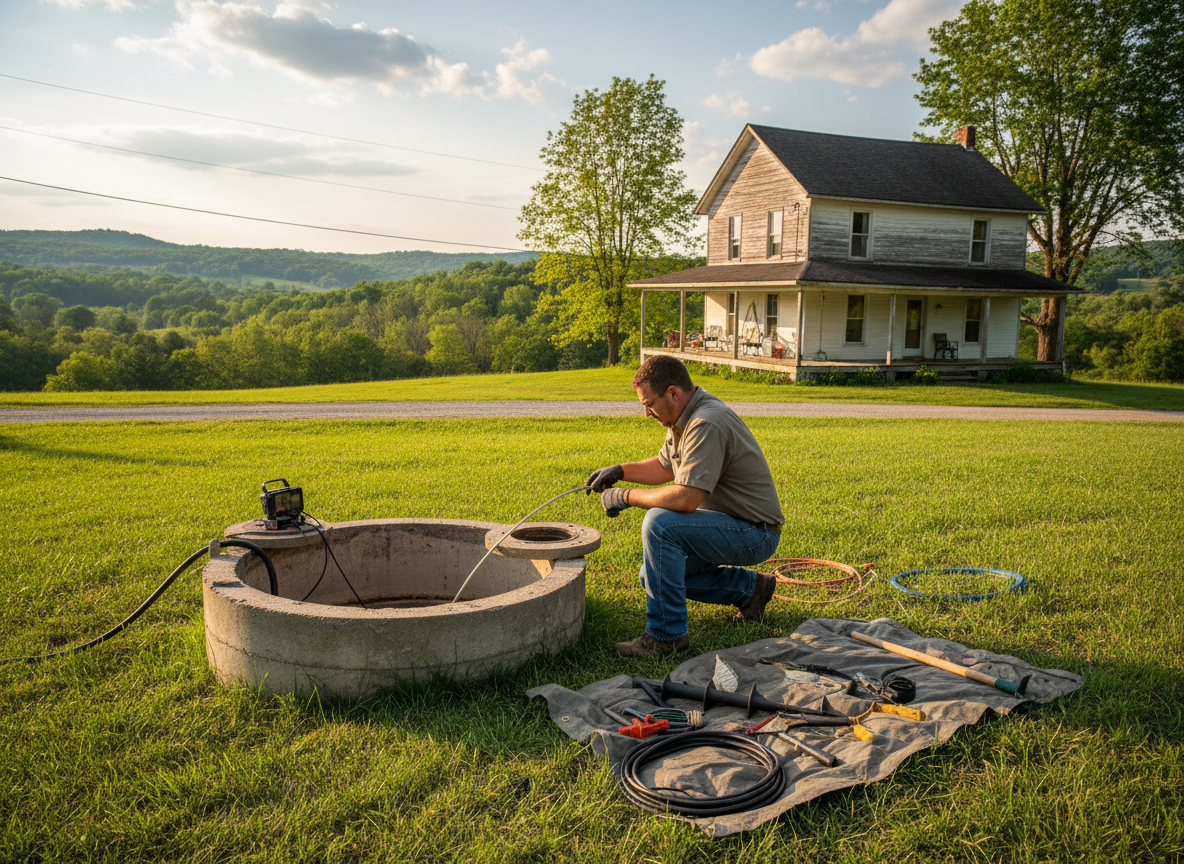
On properties outside Martinsburg city sewer lines, we begin every septic inspection by locating the buried tank and checking access points around North Martinsburg and along Opequon Creek. Shallow bedrock and sinkholes common in Berkeley County karst limestone often place tanks closer to the surface than expected, so we note any shifting or cracking caused by the terrain. Cold winters leave frozen ground that can hide risers until spring thaw, while wet springs saturate drain fields on shale ridges near North Mountain, making early detection of effluent backup essential.
We measure sludge and scum layers through the main access point and inspect inlet and outlet tees plus any effluent filter for clogging from water softener discharge or garbage disposal load. Tree roots from older farmsteads frequently invade tanks along Tuscarora Creek lots, and we trace distribution box flow to catch early signs of saturation before sewage odor reaches the yard. Homes in newer subdivisions off WV-9 or I-81 often have aerobic systems with float switches that need separate verification after heavy spring rains.
Final checks include walking the drain field for wet spots and listening for gurgling at fixtures inside the home, especially on lots where US-340 or WV-51 traffic vibration has compacted soil. Rural properties near the Martinsburg Roundhouse or Berkeley County Courthouse frequently sit on older farmhouse tanks with no risers, requiring careful excavation that respects the limestone fractures underneath. These steps give a clear picture of system health without assuming future pumping needs.
Technician insight
In Martinsburg the thing that catches most people out with septic inspection is how quickly karst limestone fractures let effluent travel sideways instead of down, so a drain field can look fine on top while the tank is already backing up. Frozen ground in winter hides the real water table until spring, and older farmhouse tanks without risers along WV-51 often get ignored until a backup shows up in the house.
Older Tank on Limestone Lot Near Opequon Creek
A homeowner outside Martinsburg noticed occasional gurgling after heavy rain. We located the tank on a shallow bedrock shelf, found the outlet tee nearly blocked by roots, and confirmed the drain field was still accepting flow. We cleared the tee and advised monitoring after the next wet spring.
Septic Inspection Services We Offer
✓Tank Condition Assessment
We open the tank and examine walls, baffles and seams for cracks caused by shallow bedrock movement common around Martinsburg.
✓Drain Field Evaluation
We probe soil and observe vegetation patterns to detect saturation on karst limestone lots where water moves unpredictably.
✓Effluent Filter and Tee Inspection
We remove and clean the effluent filter while checking inlet and outlet tees for root intrusion or buildup from household discharges.
✓Pump Chamber and Float Switch Check
We test aerobic system components and float switches to confirm they activate properly after frozen ground thaws in spring.
✓Riser and Lid Verification
We locate and inspect risers and lids on older tanks that lack them, noting any safety or access issues on rural Berkeley County parcels.
How it works
- 1
Site Walk and Tank Location
We walk the lot to find the tank using existing records and probe rods, noting terrain features like sinkholes or shale ridges that affect access.
- 2
Tank Opening and Layer Measurement
We remove lids, measure sludge and scum depths, and inspect baffles plus any effluent filter for blockages.
- 3
Drain Field and Distribution Check
We examine the drain field surface and distribution box for even flow and early signs of saturation after wet spring conditions.
- 4
Report and Recommendation
We compile findings on tank condition, filter status and field performance into a clear summary for the homeowner.
Pricing
Cost depends on tank size, access difficulty and overall system condition at the time of inspection.