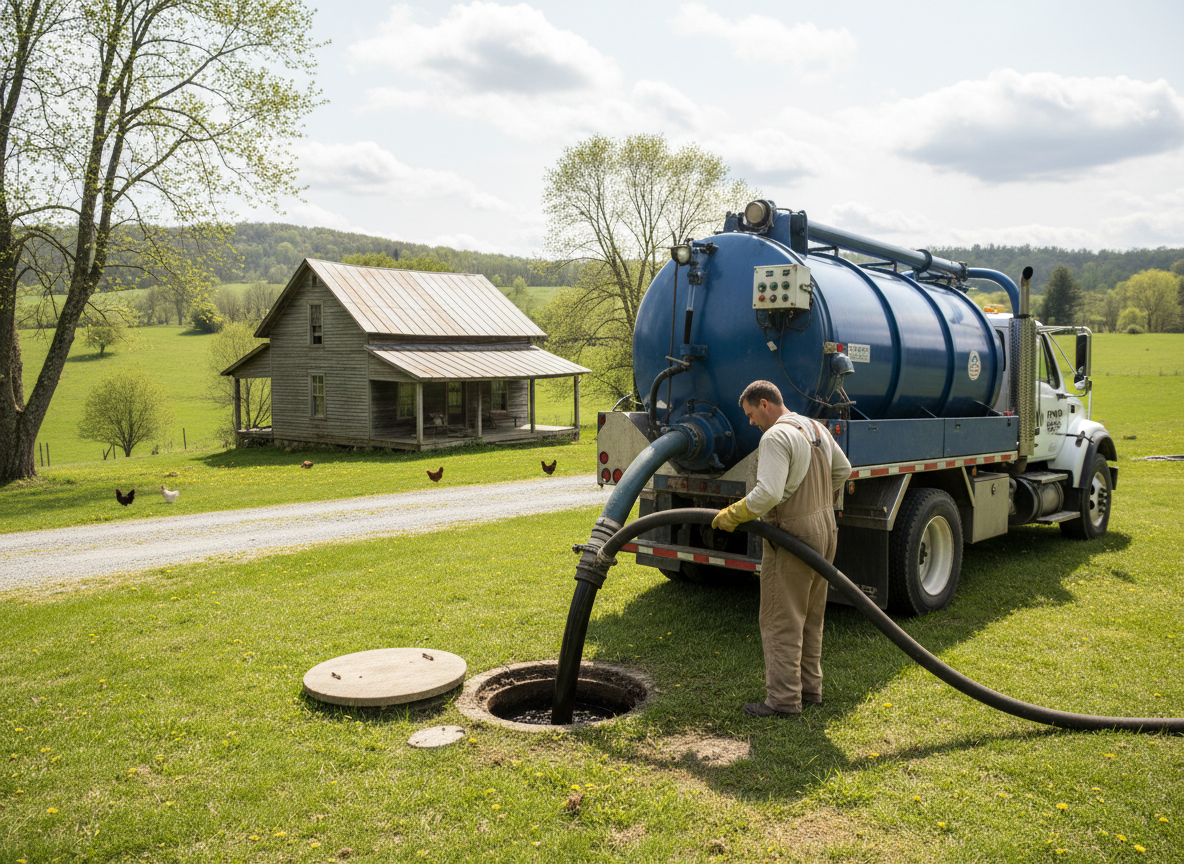
On rural lots around North Martinsburg and along WV-9, we regularly open tanks that sit in shallow bedrock with sinkholes nearby. These conditions make it easy for tree roots to reach inlet and outlet tees or for the distribution box to shift. We locate the tank using existing risers when present, then check the sludge and scum layers with a sludge judge before pumping begins. Frozen ground in winter often requires extra care to avoid damaging lids or compacting soil over the drain field.
Properties near Tuscarora Creek or older farmhouses off US-11 frequently show saturated drain fields after wet springs. We inspect the effluent filter and float switches in pump chambers while the tank is open, looking for signs of backup or sewage odor that point to overloaded systems from garbage disposals or water softener discharge. Pumping is done through the main access point to remove solids without pushing material into the absorption area.
Along I-81 corridors and in subdivisions on shale ridges, newer tanks sometimes connect to aerobic systems that need separate handling. We verify the condition of baffles and tees during every visit because karst limestone lets water move quickly underground, increasing the risk of groundwater impact if solids escape. After pumping we replace lids securely and note any access limitations created by driveways or landscaping.
Technician insight
In Martinsburg, the thing that catches most people out with Septic Tank Pumping is shallow bedrock and sinkholes around Opequon Creek that hide older farmhouse tanks under shale ridges, so we often have to dig farther than expected on rural lots after frozen ground thaws.
North Martinsburg Farmhouse Access Issue
The homeowner reported slow drains on a property off WV-45 near North Mountain. We located the buried tank in karst limestone that had shifted slightly. Pumping revealed heavy root intrusion at the outlet tee. We cleared the line and secured the lid, restoring flow without disturbing the drain field.
Septic Tank Pumping Services We Offer
✓Sludge and Scum Layer Removal
Pumping removes accumulated solids that can clog distribution boxes and shorten drain field life on shallow bedrock lots.
✓Inlet and Outlet Tee Inspection
We check baffles and tees for damage or root intrusion common where tree cover meets karst terrain near Opequon Creek.
✓Effluent Filter Cleaning
Cleaning the filter prevents solids from reaching the drain field, especially useful on wet spring lots with high water tables.
✓Riser and Lid Access Upgrade
Adding or repairing risers makes future pumping easier on buried tanks located under driveways or landscaping in North Martinsburg.
✓Pump Chamber and Float Switch Check
We inspect pumps and switches in aerobic or pumped systems to avoid alarms triggered by high water after heavy rain.
How it works
- 1
Locate and Expose the Tank
We use site features and existing risers to find the tank on lots with shallow bedrock or sinkholes.
- 2
Measure Sludge and Scum Levels
A sludge judge checks layer depths to confirm pumping needs and spot potential drain field issues.
- 3
Pump Out Contents
Solids and liquids are removed through the main access while protecting tees and the distribution box.
- 4
Inspect and Secure
We examine baffles, filters and lids before closing the tank and noting any access or terrain concerns.
Pricing
Cost depends on tank size, access and condition.