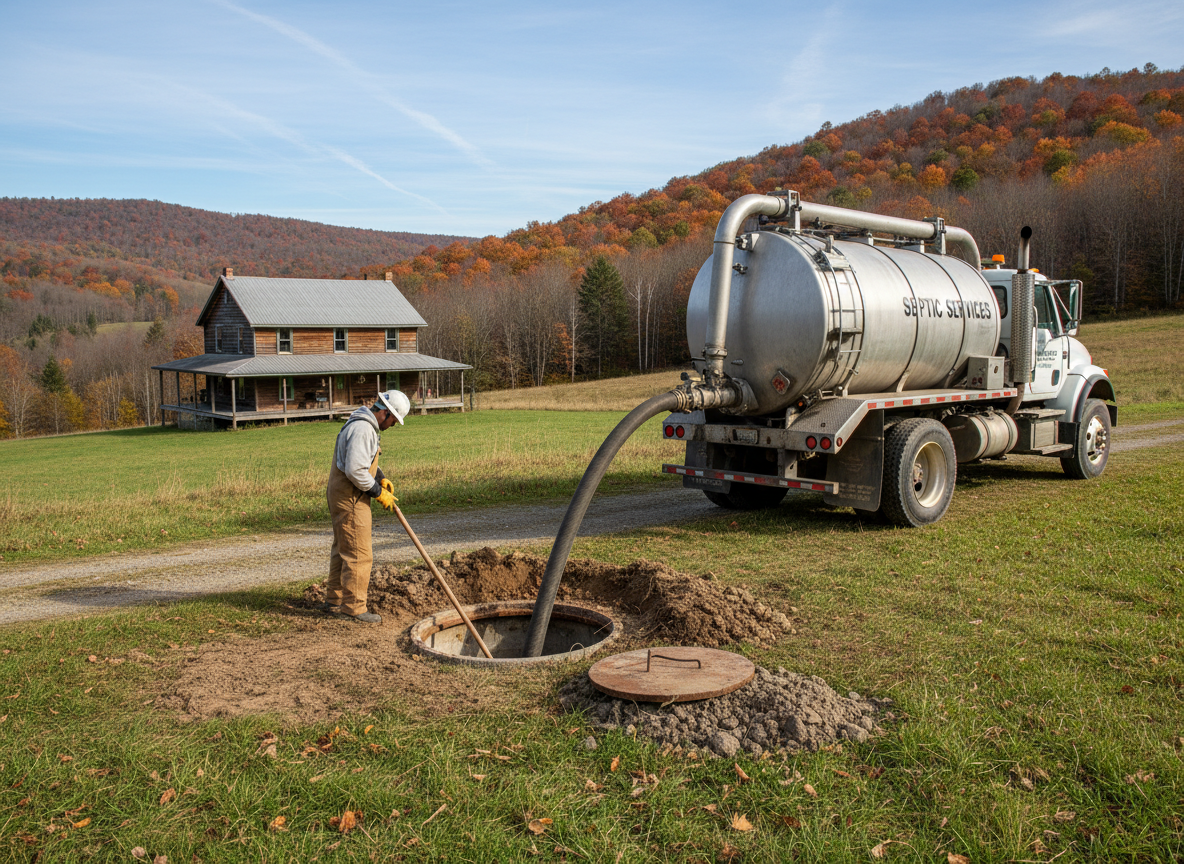
On older rural properties around North Martinsburg and along Opequon Creek, septic tanks often sit under shallow bedrock or shale ridges that limit how deep they can be buried. Crews first locate the tank by probing from the house sewer line outward, watching for signs of past excavation or sinkhole activity common in the Shenandoah Valley karst limestone. Once opened, they measure sludge and scum layers with a sludge judge to see if the tank needs full cleaning before the material reaches the outlet tee and risks clogging the drain field.
Frozen ground in winter and wet springs change how crews work on lots served by WV-9 or US-340. They check for water softener discharge or garbage disposal load that accelerates solids buildup, then inspect baffles, inlet and outlet tees, and any effluent filter for damage or blockage. On properties with distribution boxes, they verify flow is even so one side of the drain field does not become saturated while the other stays dry.
Newer subdivisions off I-81 and WV-51 often have tanks placed near tree roots or under driveways, making lid access the first hurdle. Technicians remove risers if present, pump out the contents, and wash down interior walls to break up remaining scum before checking the pump chamber and float switch on aerobic systems. Final walkthrough includes noting any sewage odor or gurgling at fixtures that could point to a saturated drain field downstream.
Technician insight
In Martinsburg, the thing that catches most people out with Septic Tank Cleaning is shallow bedrock and karst limestone on older rural lots that places tanks right under driveways or near North Mountain shale ridges, so lids end up buried deeper than expected after winter freeze-thaw cycles.
North Martinsburg Farmhouse Access Issue
Homeowner noticed gurgling at fixtures after heavy spring rains. Crew located the tank under a gravel driveway near Tuscarora Creek where shallow bedrock had prevented deeper burial. Pumping revealed high scum on the outlet tee and a partially blocked effluent filter; after cleaning and filter service the system returned to normal flow without further backup.
Septic Tank Cleaning Services We Offer
✓Effluent Filter Cleaning
Removes trapped solids from the effluent filter so liquid can exit the tank without carrying over into the drain field on karst limestone lots.
✓Baffle and Tee Assessment
Inspects inlet and outlet baffles plus tees for cracks or displacement that allow solids to reach the distribution box on older farmhouse tanks.
✓Riser and Lid Access Upgrade
Exposes buried tanks under driveways or landscaping so future cleanings avoid digging through frozen ground or shale ridges.
✓Pump Chamber Service
Clears the pump chamber and tests the float switch on aerobic systems common in Berkeley County subdivisions outside public sewer.
✓Drain Field Flow Check
Evaluates the distribution box and drain field lines for even distribution before saturation occurs from heavy spring rains or high water tables.
How it works
- 1
Locate and Expose
Probe from the house sewer line to find the tank while checking for tree roots, shallow bedrock, or sinkhole interference typical around Tuscarora Creek.
- 2
Open and Inspect
Remove lids or risers, measure sludge and scum layers, and examine baffles, tees, and effluent filter for damage before pumping begins.
- 3
Pump and Clean
Remove all contents, wash interior walls, and clear any remaining solids that could affect the outlet or pump chamber on aerobic setups.
- 4
Reassemble and Note
Replace lids, verify flow through the distribution box, and record access conditions for the next visit on rural Berkeley County properties.
Pricing
The cost of septic tank cleaning depends on tank size, access and condition.