2026-11-07 ·
Septic Systems on Karst Limestone: What Eastern Panhandle Homeowners Should Know
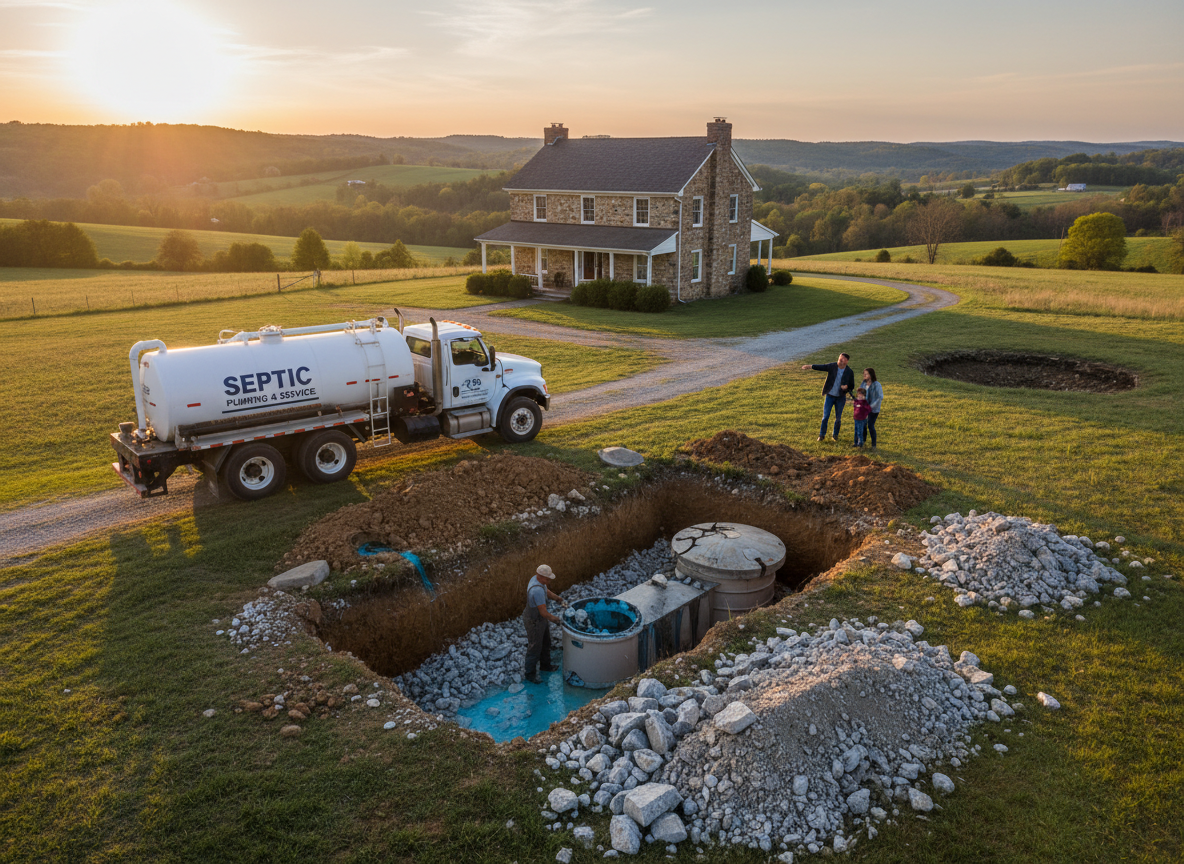
Homeowners across Berkeley and Jefferson Counties must recognize that karst limestone creates direct pathways for effluent to reach groundwater, requiring stricter attention to tank levels and drain field saturation than in non-karst soils.
Karst Limestone Geology in Berkeley and Jefferson Counties
The Eastern Panhandle sits atop karst limestone that dissolves over time and forms fractures, sinkholes, and underground channels. These features let water move quickly downward instead of filtering slowly through soil. In rural lots outside Downtown Martinsburg and North Martinsburg, many systems sit directly above these pathways. During the humid continental climate’s heavy spring rains, effluent can travel farther and faster than expected. Frozen ground in January and February further limits absorption, pushing wastewater toward the surface or into new fractures. The Berkeley County Courthouse area and Martinsburg Roundhouse sit on the same formation, so the same geology applies to properties in Hedgesville and surrounding townships.
How Karst Conditions Affect Drain Fields and Tanks
Drain fields on karst limestone often receive less treatment time because effluent bypasses the soil column. This raises contamination risk for wells and springs that supply many rural homes. Tanks themselves can shift when underlying limestone erodes, creating cracks that allow groundwater infiltration during wet periods. In winter, frost heave around the tank lid and inlet pipe becomes more likely on exposed rural lots. Homeowners notice slower drains or wet spots near the field earlier than in clay-heavy soils. Regular pumping prevents solids from reaching the field and accelerating these issues. Septic tank pumping removes accumulated sludge before it migrates into fractures.
Practical Checks for Local Homeowners
Walk the drain field after heavy rain or spring thaw and note any pooling or odors. Measure scum and sludge depth twice a year using a measuring stick through the inspection port. Keep roof downspouts and sump pumps directed away from the field to reduce hydraulic loading on already fast-draining limestone. Avoid planting trees within 25 feet of the field because roots follow moisture into limestone seams. Record pumping dates and volumes so patterns emerge over multiple seasons. When buying or selling, schedule a septic inspection that specifically checks for effluent movement into bedrock fractures rather than relying on standard perc tests alone.
When to Schedule Professional Assessment
Persistent slow drains, gurgling toilets, or lush grass strips over the field indicate the system may be interacting with karst features. A targeted inspection can locate the tank and field relative to known sinkhole zones and measure separation from groundwater. Drain field problems often appear first in karst areas because effluent reaches bedrock before proper treatment occurs. Homeowners in Charles Town, Inwood, and Falling Waters who follow the guidance in How Often Should You Pump a Septic Tank in Berkeley County reduce the chance of solids reaching fractures. Properties listed for sale benefit from the steps outlined in What to Expect From a Real Estate Septic Inspection in West Virginia before karst-related issues surface during buyer due diligence.