2026-11-07 ·
What to Expect From a Real Estate Septic Inspection in West Virginia
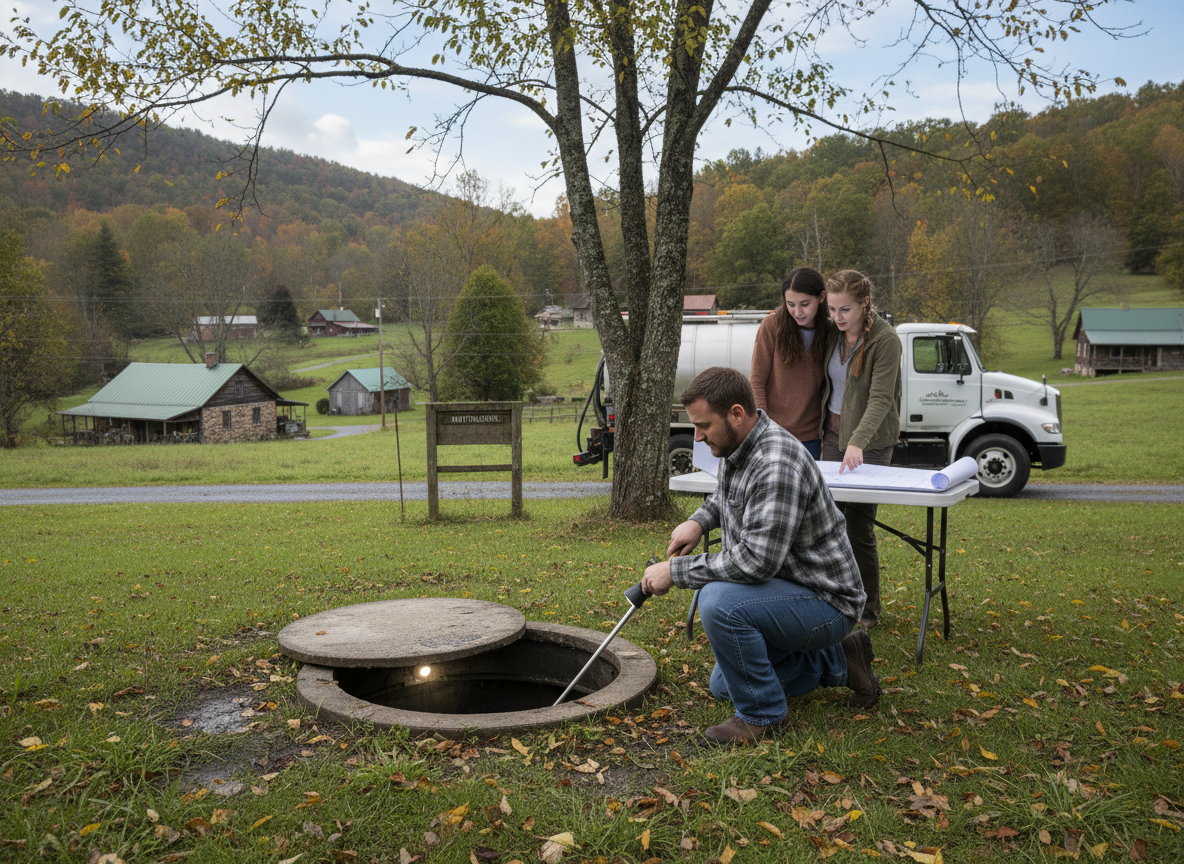
A real estate septic inspection in West Virginia centers on a thorough evaluation of the tank, distribution box, and drain field to confirm the system handles household wastewater without surfacing or backing up. In the Eastern Panhandle, inspectors account for karst limestone terrain common to Berkeley and Jefferson Counties that can channel effluent quickly through fissures, raising the stakes for any undetected leaks. The process usually takes 60 to 90 minutes on a standard rural lot and concludes with a written summary of observed conditions.
Preparing the Property for Inspection
Homeowners should clear vegetation and mark the approximate tank location if known so the inspector can reach the lid without delay. In Martinsburg and surrounding areas such as Hedgesville, frozen ground during winter months often requires extra time to uncover access points. Providing the last pumping date helps the inspector gauge sludge depth more accurately. Rural properties with larger lots may need the inspector to walk the entire drain field footprint, especially where limestone outcrops interrupt soil absorption. Locating a Septic Tank becomes useful when records are missing and surface clues are faint.
Tank and Component Evaluation
Inspectors first remove the lid and measure sludge and scum layers inside the tank to determine whether pumping is warranted before closing. They check inlet and outlet baffles for cracks or missing sections that allow solids to reach the drain field. In North Martinsburg neighborhoods with older homes, concrete tanks from the 1970s frequently show deterioration along the waterline. The distribution box is opened next to verify even flow to all laterals; settling or root intrusion here can starve portions of the field. Septic Tank Pumping is often recommended when measurements exceed one-third of tank depth.
Drain Field and Site Assessment
Walking the absorption area reveals wet spots, odors, or lush grass strips that signal uneven loading or partial failure. Karst limestone beneath many Berkeley County lots can route wastewater into groundwater before it filters through soil, so inspectors note any depressions or sinkholes near laterals. In humid continental conditions, spring snowmelt saturates clay-heavy soils and masks marginal drainage that only appears after heavy use. Septic Systems on Karst Limestone: What Eastern Panhandle Homeowners Should Know explains how these geological features alter inspection priorities. Homeowners can perform a simple check by running multiple fixtures for ten minutes and watching for ponding near the field.
Final Report and Follow-Up Steps
The inspector compiles findings into a document that lists any deficiencies, such as cracked baffles or saturated soil, without assigning repair costs. Buyers and sellers then decide whether to proceed with the transaction or request corrections. Properties in Charles Town or Shepherdstown often reference this report when negotiating escrows for future maintenance. Linking to Septic Inspection provides additional context on routine versus transaction-specific evaluations. After closing, new owners typically schedule a pumping within the first year to reset the system baseline.