2026-11-07 ·
Why Your Septic Alarm Is Going Off
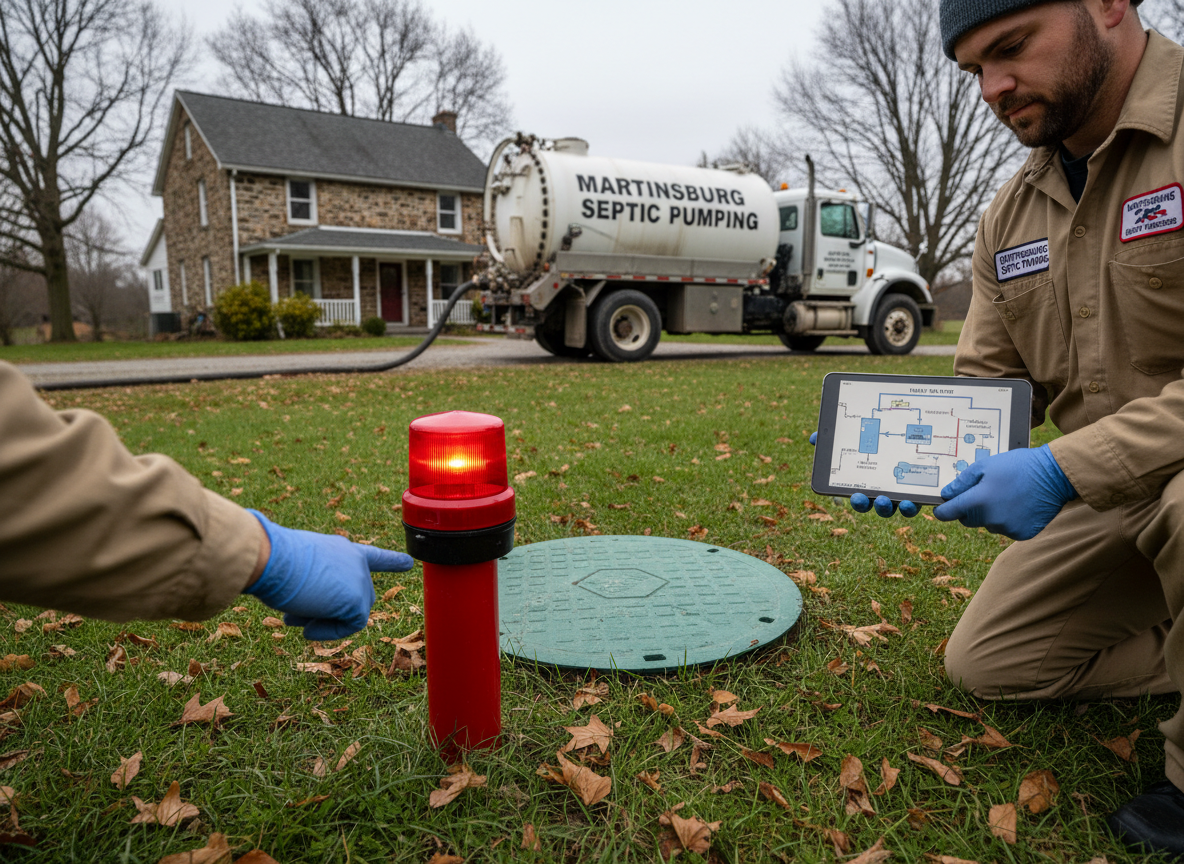
The septic alarm typically goes off when water levels rise above the normal operating range inside the tank or pump chamber, most often from a clogged effluent filter, saturated drain field, or pump that has stopped working. In Berkeley and Jefferson Counties this happens more frequently on rural lots where heavy winter rains or spring thaws push extra water into systems already dealing with karst limestone that drains unevenly.
Common Reasons the Alarm Activates
High water in the pump chamber is the leading trigger because the float switch rises and closes the circuit. A filter coated with solids blocks effluent from leaving the tank, so incoming wastewater has nowhere to go and the level climbs. In North Martinsburg and surrounding areas, tree roots sometimes invade older lines and create the same backup effect. Another frequent cause is a pump that has burned out after years of cycling through the humid continental climate swings, where summer heat and winter freezes both take a toll on electrical components.
Homeowners can start by listening for the pump hum when the alarm sounds. If the pump runs but the level stays high, the filter or drain field is the likely culprit. If the pump is silent, check the breaker and the alarm panel connections before assuming a deeper failure. These first checks help narrow whether the issue stays at the tank or has moved downstream into the absorption area.
How Local Karst Limestone and Weather Play a Role
Karst limestone under much of the Eastern Panhandle creates pockets and fractures that let effluent move unpredictably, so a drain field can reach saturation faster than on uniform soil. When winter temperatures drop and the ground freezes, water cannot percolate as quickly and backs up toward the tank. Spring rains then add more volume before the soil thaws fully. These cycles explain why alarms appear most often between late February and early April in places like Hedgesville and Falling Waters.
The same geology also means small cracks in older tanks can let groundwater seep in during wet months, raising the level without any household overuse. Checking the tank during a dry spell can reveal whether infiltration is occurring through seams or riser joints.
Step-by-Step Homeowner Checks
Begin at the alarm panel and note any lights or error codes before resetting. Locate the tank and lift the riser lid to inspect the filter; if it is coated, remove and rinse it with a hose. Next, observe the pump chamber for several minutes to see whether the pump activates and lowers the water. Record how long the pump runs and whether the level returns to normal.
Walk the drain field and look for soft spots or odors that indicate saturation. Avoid flushing or running water while testing so you can isolate whether the system is handling normal household flow. These observations give a clear picture before contacting a service provider.
Next Steps When Checks Do Not Resolve the Alarm
If the filter is clean, the pump runs, and the drain field shows no surface water, schedule a septic inspection to measure sludge and scum layers and test pump performance under load. Persistent alarms after these steps often point to drain field problems that require further evaluation.